In the fast-evolving events industry, sourcing — finding the right vendors, sponsors, talent, venues, and suppliers — can make or break an event’s success. With rising costs, sustainability demands, and technology disruptions, effective sourcing has become a core skill for event professionals. Whether you manage corporate conferences, weddings, or large festivals, mastering sourcing strategies in 2026 is essential for delivering exceptional experiences on budget.
Aspiring event managers seeking a competitive edge should consider enrolling in a professional event management course or event management institute. Institutions like the Asian Institute Of Event Management (AIEM) in Kolkata provide hands-on training in procurement, vendor management, and negotiation — skills that top event planners rely on daily.
Why Sourcing Matters More Than Ever in 2026
Global supply chains remain volatile, while attendees and clients demand sustainable, tech-integrated, and unique experiences. Strong sourcing skills help control costs, ensure quality, and unlock creative opportunities. Professionals trained at leading event management institutes excel here because they combine theoretical knowledge with real-world practice.
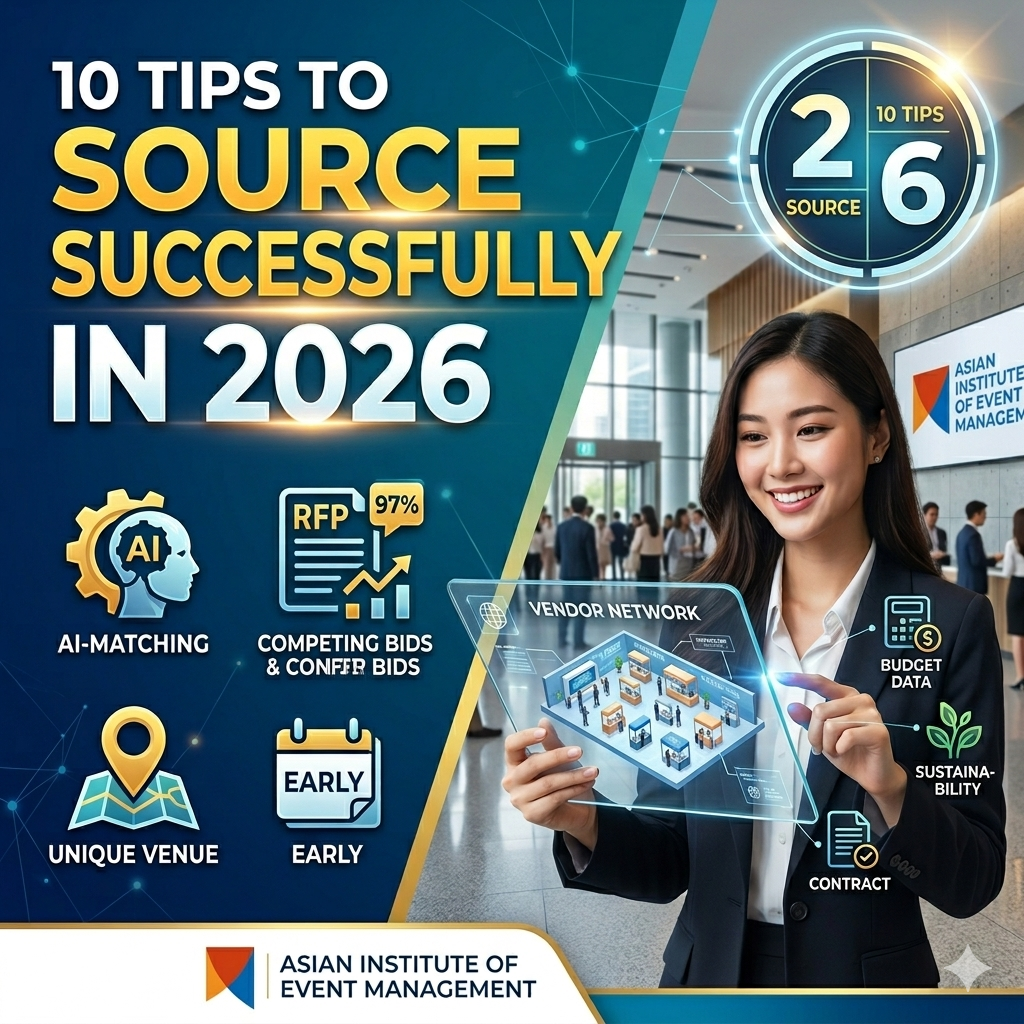
10 Proven Tips to Source Successfully in 2026
1. Leverage AI-Powered Sourcing Platforms
Use AI tools to scan vendor databases, compare quotes, and predict reliability. AI helps match your event needs with the best options faster than traditional methods.
2. Build a Robust Vendor Database
Maintain an updated CRM or spreadsheet with past performance ratings, contacts, specialties, and sustainability credentials. Top event management courses teach students how to create and manage such systems effectively.
3. Prioritize Sustainability
Source eco-friendly vendors, local suppliers, and zero-waste partners. Clients increasingly favor green events — highlight these in proposals for a competitive advantage.
4. Negotiate Smartly with Data
Come to negotiations armed with market benchmarks, volume commitments, and performance metrics. Strong negotiation skills are a highlight of quality event management training.
5. Diversify Your Supplier Pool
Avoid over-reliance on a few vendors. Build relationships across regions and categories to mitigate risks and discover better deals.
6. Focus on Value, Not Just Price
Evaluate total value including reliability, creativity, and post-event support. Sometimes a slightly higher investment yields far better results.
7. Use Technology for RFPs
Digital RFP platforms streamline requests for proposals, automate comparisons, and improve transparency. Learn these tools during practical modules at institutes like Asian Institute Of Event Management.
8. Network Relentlessly
Attend industry events, join associations, and engage on professional platforms. Many of the best sourcing opportunities come through warm referrals.
9. Incorporate Performance Clauses
Include clear KPIs, penalties, and bonuses in contracts. This ensures accountability and high service standards.
10. Conduct Thorough Post-Event Reviews
Document what worked and what didn’t after every event. Continuous improvement turns good sourcing into great sourcing over time.
How the Right Education Prepares You for Sourcing Excellence
At the Asian Institute Of Event Management, students don’t just learn theory — they apply it. Through live projects, internships, and industry workshops, learners gain real experience in sourcing for weddings, corporate events, concerts, and exhibitions. The curriculum covers vendor coordination, budgeting, production planning, and entrepreneurship, making graduates job-ready or equipped to launch their own ventures.
AIEM offers flexible programs including an 11-month Diploma in Event Designing and a 2-year Advanced Diploma in Event Management, with practical exposure, paid internships, and placement assistance. Located in Kolkata, it ranks among the sought-after event management institutes for students across India.
Final Thoughts
Successful sourcing in 2026 requires a mix of technology, relationships, strategy, and adaptability. By implementing these 10 tips, you can source smarter, reduce risks, and elevate your events.
If you’re serious about building a thriving career in event management, invest in structured learning. Explore the industry-focused programs at the Asian Institute Of Event Management and gain the practical skills top employers and clients demand. Admissions are open — start your journey toward becoming an event sourcing expert today!